
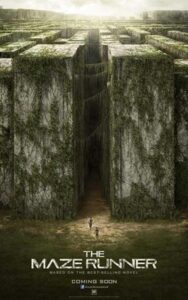
 The Maze Runner
This month, some A Grade Ahead English classes are focusing on fiction and dystopian societies. The book The Maze Runner by James Dashner and the film, directed by Wes Hall takes place in a dystopian society. Dystopian fiction is a subgenre of science fiction.
When The Maze Runner hit theaters, fans were excited to see James Dashner’s world come alive. While the film captured the danger and mystery of the Maze, many deeper elements — especially symbolism, motifs, tone shifts, and character motivations — were changed or simplified. Below is a closer look at how the book and film differ, and what these differences say about the story’s meaning.
Theme
Leadership and transformation are two key themes. When Thomas questions the system, there is tension because Gally opposes change. Additionally, Minho sets an example, and Alby follows tradition. This comparison demonstrates that while leadership can take many different forms, not all of them are effective in a society that is changing.
Another major theme is survival through cooperation. See below for more details:
- Alby, as the original leader, represents stability and order. He believes survival depends on rules and routine.
- Minho, the head Runner, shows survival through courage, intelligence, and action.
- Gally believes survival comes from strict obedience and punishment.
Did you know that A Grade Ahead examines the science fiction genre and the literary device of theme in our 6th Grade English program?
Tone
The tone begins as uncertain and controlled, reflecting Alby’s structured leadership in the Glade. As the Maze becomes more dangerous and rules fail, the tone shifts to fear and urgency.
Gally’s anger and violence intensify the tone, especially as he becomes more unstable. Alby’s injury marks a turning point, shifting the tone from cautious order to chaos.
The emotional tone deepens through personification, such as in Chapter 13, page 188: “Guilt consumed him when he realized how he truly felt.” This figurative language shows how emotional pressure affects not just Thomas, but the whole group as leadership begins to break down.
Is your child ready to take their learning to the next level while still having fun? Do you want them to understand the difference between mood and tone? A Grade Ahead doesn’t forget about our older students, and we cover these topics and more in our 7th grade English program!
Metaphor: The Maze as a Code
The idea that “the maze is a code” (Chapter 14, p. 95) reinforces the theme that thinking and cooperation matter more than fear.
- Minho plays a crucial role in solving this metaphor, as his experience as a Runner allows patterns to emerge.
- Alby struggles to accept this idea because it disrupts the system he helped build.
- Gally rejects the metaphor entirely, believing the Maze should not be challenged.
The coded words revealed in Chapter 40 — FLOAT, CATCH, BLEED, DEATH, STIFF, PUSH — prove that persistence and teamwork lead to understanding.
Symbolism
Keep reading to explore the different symbols found in The Maze Runner:
- The Maze symbolizes hopelessness and control.
- The Grievers symbolize fear, enforcing punishment and obedience.
- The Glade symbolizes false safety.
Characters interact with these symbols differently:
- Alby clings to the Glade as safety.
- Minho challenges the Maze daily, refusing to accept hopelessness.
- Gally supports fear-based control, aligning himself with the Grievers’ purpose.
Motifs
Several motifs appear in The Maze Runner. The film also emphasizes them visually:
- Rules and order: Supported by Alby; enforced by Gally
- Memory loss: Shared by all characters, reinforcing identity loss
- Running and movement: Represented most clearly by Minho
- Fear and punishment: Embodied by Gally and the Grievers
Symbols and motifs are literary devices many upper-level English students will dive into in their classes, which is why A Grade Ahead developed our high school English program!
Conflict
How do the different characters experience conflict in The Maze Runner? Find out below!
- Alby vs. Change: Alby’s fear of losing control creates internal conflict.
- Minho vs. the Maze: Minho’s experience in the Maze represents courage and logic.
- Gally vs. the Group: This explores fear-driven obedience and external conflict.
Notably in terms of characterization, in the film, Gally is portrayed as more openly aggressive, while the book provides more background on his fear and frustration.
A Grade Ahead explores characterization, among other fiction topics, in our 5th grade English program Check it out here!
Conclusion
While Thomas is the catalyst for change, Alby, Minho, and Gally each represent different responses to fear and control. Together, they help develop the novel’s themes, tone shifts, symbolism, and motifs. The book allows deeper understanding of these characters, while the film highlights conflict and action.
What do you think? Have you read or watched The Maze Runner? Do you prefer the book or the movie? Let us know which book-turned-movie we should explore next in the comments!
At A Grade Ahead, we love fostering success in our enrichment programs. Call or visit an A Grade Ahead academy near you to get a free curriculum sample, take a free assessment, or sign up for a free trial class today!
Author: Pamela Crum, Teacher Coordinator at A Grade Ahead
